

Introduction
Facilities are no longer viewed as supporting assets that simply keep buildings operational. Today, they play a strategic role in business performance, employee well-being, operational resilience, and sustainability. As organizations evolve, so do the expectations placed on facility management. It is no longer enough to react to maintenance issues or manage physical infrastructure. Modern organizations require integrated systems that improve performance, optimize resources, and support long-term business objectives.
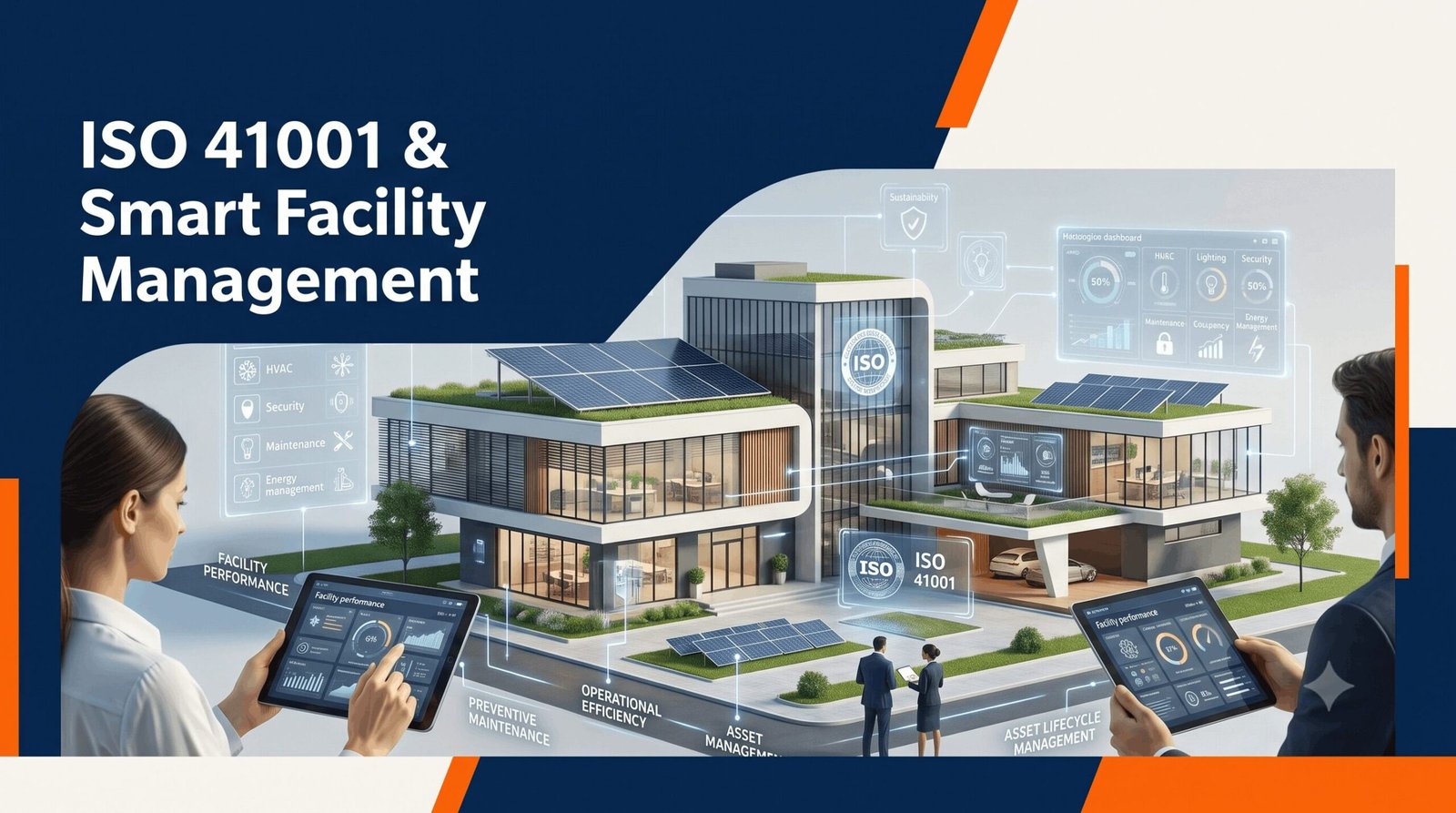
This shift has given rise to smart facility management, where technology, data, people, and processes work together to create efficient, safe, and sustainable workplaces. At the center of this transformation is ISO 41001, the international standard for Facility Management Systems (FMS). Rather than focusing solely on buildings, ISO 41001 provides a structured framework that aligns facility management with organizational strategy, helping businesses operate more efficiently while preparing for future challenges.
The Evolution of Facility Management
Traditional facility management often focused on routine maintenance, repairs, and asset upkeep. While these responsibilities remain important, today’s organizations expect facility teams to contribute to broader business goals such as operational efficiency, employee productivity, sustainability, and business continuity.
Modern facilities are expected to support hybrid work environments, optimize energy consumption, improve occupant experience, and minimize operational disruptions. Achieving these objectives requires more than reactive maintenance. It requires a systematic management approach that drives continual improvement.
ISO 41001 addresses this need by establishing a management system that integrates facility operations into an organization’s overall business strategy.
What Makes Facility Management “Smart”?
Smart facility management goes beyond adopting digital technologies or automating building systems. It is about making informed decisions through structured processes, measurable objectives, and continual performance improvement.
A smart facility management system focuses on:
- Data-driven decision making
- Efficient resource utilization
- Risk-based planning
- Preventive maintenance
- Sustainable operations
- Enhanced workplace experience
- Continuous improvement
ISO 41001 supports each of these principles by providing organizations with a framework that improves consistency, accountability, and operational performance.
Aligning Facilities with Business Objectives
One of the greatest strengths of ISO 41001 is its ability to connect facility management with organizational goals.
Facilities influence nearly every aspect of business operations, from employee comfort and customer satisfaction to operational costs and regulatory compliance. When facility management operates independently from business strategy, organizations often experience inefficiencies, duplicated efforts, and increased operational risks.
ISO 41001 encourages leadership to establish clear objectives that align facility management activities with overall business priorities. This alignment ensures that every decision contributes to organizational performance rather than simply maintaining infrastructure.
The result is a facility management function that creates measurable business value.
Driving Operational Efficiency
Operational efficiency is one of the primary outcomes of implementing ISO 41001.
The standard encourages organizations to evaluate facility processes, identify inefficiencies, and implement standardized procedures that improve consistency across operations.
Examples include:
- Standardizing maintenance activities
- Improving asset lifecycle management
- Reducing equipment downtime
- Optimizing space utilization
- Streamlining contractor management
- Enhancing service delivery
By reducing waste and improving operational coordination, organizations can lower costs while maintaining high-quality facility services.
Instead of responding to recurring problems, teams focus on preventing them through structured planning and continuous monitoring.
Supporting Sustainable Operations
Sustainability has become a critical component of modern facility management.
Buildings account for a significant portion of global energy consumption and environmental impact. Organizations are increasingly expected to reduce emissions, improve energy efficiency, and manage resources responsibly.
ISO 41001 supports sustainable operations by encouraging organizations to:
- Optimize energy use
- Improve water management
- Reduce operational waste
- Extend asset life through preventive maintenance
- Improve resource planning
- Support environmental objectives
When integrated with standards such as ISO 14001, facility management becomes a key contributor to an organization’s sustainability strategy.
This approach not only reduces environmental impact but also improves long-term operational efficiency.
Strengthening Risk Management and Business Continuity
Unexpected facility failures can disrupt operations, affect employee safety, and impact customer confidence.
ISO 41001 adopts a risk-based approach that enables organizations to identify potential issues before they develop into operational disruptions.
This includes managing risks related to:
- Infrastructure reliability
- Equipment performance
- Service continuity
- Workplace safety
- Contractor performance
- Regulatory compliance
Preventive planning reduces unexpected downtime while improving organizational resilience.
In an increasingly uncertain business environment, organizations benefit from facility management systems that support continuity rather than simply responding to emergencies.
Enhancing Workplace Experience
Facilities directly influence how people experience the workplace.
Comfortable, safe, and well-managed environments improve employee satisfaction, productivity, and engagement. Poor facility management, on the other hand, can negatively affect morale, operational performance, and customer perception.
ISO 41001 emphasizes understanding the needs of building occupants and other interested parties. Organizations are encouraged to monitor service performance, gather feedback, and continually improve workplace conditions.
As businesses continue to adopt flexible work models, creating high-performing workplaces has become more important than ever.
Smart facility management ensures that facilities actively support people, not just infrastructure.
Building a Culture of Continuous Improvement
One of the defining characteristics of ISO management systems is continual improvement, and ISO 41001 is no exception.
Organizations are encouraged to monitor performance, conduct internal audits, evaluate objectives, and implement corrective actions that strengthen facility operations over time.
Rather than viewing facility management as a collection of isolated maintenance activities, ISO 41001 promotes an integrated management system where every improvement contributes to organizational success.
This culture of continual improvement helps organizations remain adaptable as technologies, regulations, and workplace expectations continue to evolve.
Why ISO 41001 Is the Future
The future of facility management is no longer defined by how quickly organizations repair equipment or maintain buildings. It is defined by how effectively facilities support business performance, sustainability, employee well-being, and operational resilience.
ISO 41001 provides the structure needed to make this transition. It transforms facility management from a reactive operational function into a strategic business discipline that delivers measurable value across the organization.
As organizations embrace digital transformation, smart buildings, and sustainability initiatives, ISO 41001 serves as the management framework that ensures these investments translate into long-term operational success.
Future-ready organizations understand that smart facilities are not built through technology alone. They are built through effective management systems.
How TUVWESTEN Supports ISO 41001 Implementation
Successfully implementing ISO 41001 requires more than documenting procedures. It requires aligning facility management practices with organizational objectives, establishing measurable performance indicators, and creating systems that support continual improvement.
TUVWESTEN helps organizations throughout their ISO 41001 journey by providing expert consulting, implementation guidance, internal audit support, training, and certification readiness services. By combining international best practices with practical industry expertise, TUVWESTEN enables organizations to build smarter, more efficient facility management systems that deliver lasting business value.
Conclusion
Facility management has evolved into a strategic function that directly influences organizational performance, sustainability, and resilience. Organizations that continue relying on reactive maintenance approaches risk falling behind in an increasingly competitive and technology-driven business environment.
ISO 41001 provides a comprehensive framework for building smarter facility management systems that improve operational efficiency, strengthen risk management, enhance workplace experiences, and support sustainable growth. By aligning facilities with business strategy and embracing continual improvement, organizations position themselves for long-term success.
As the future of work continues to evolve, ISO 41001 is not simply a facility management standard. It is a strategic foundation for organizations committed to building smarter workplaces and stronger businesses.