

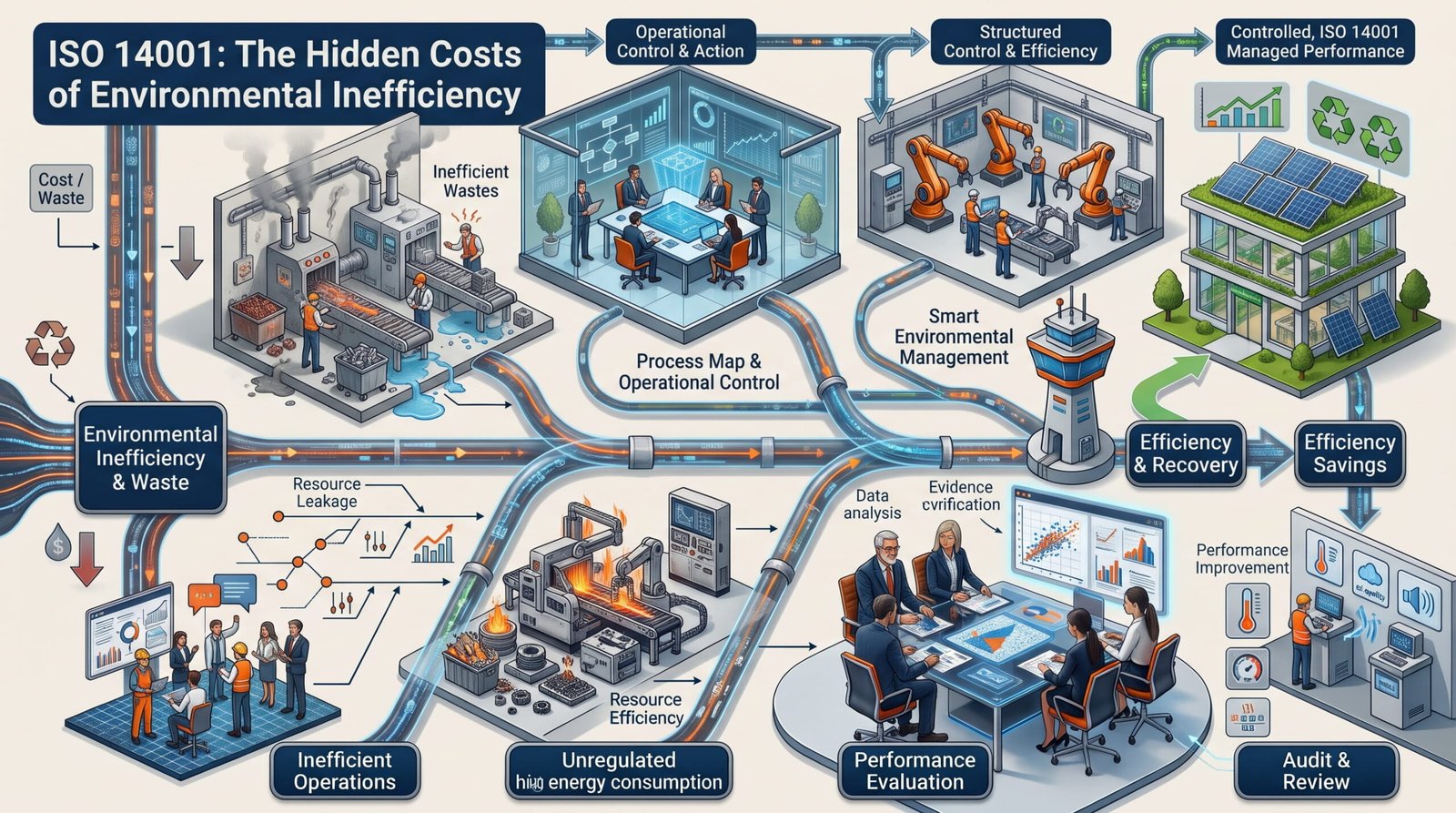
Environmental inefficiency often costs organizations more than they realize. Excessive energy consumption, material waste, inefficient water use, and poorly controlled processes can quietly increase operating expenses while affecting environmental performance.
These problems rarely exist in isolation. A production process that consumes unnecessary materials may also generate more waste. Poor equipment maintenance can increase energy consumption, while inadequate environmental controls can create additional compliance and operational risks.
ISO 14001 provides a structured approach to identifying and managing these inefficiencies. Through an Environmental Management System (EMS), organizations can understand their environmental impacts, establish measurable objectives, and improve how they use resources.
Where Do Environmental Inefficiencies Hide?
Environmental inefficiencies often develop within routine operations. Because they become part of everyday work, organizations may overlook their cumulative impact.
Excessive Energy Consumption
Inefficient equipment, unnecessary operating hours, poor maintenance, and inadequate energy monitoring can increase consumption. These issues may raise utility costs without improving production or service quality.
Monitoring energy use and reviewing operational practices can help organizations identify opportunities to improve efficiency.
Material Waste and Rework
Damaged materials, production errors, excessive packaging, and poorly controlled processes can generate unnecessary waste. When materials require replacement or products need rework, organizations also lose time and productive capacity.
Environmental management encourages businesses to examine material use and identify opportunities to prevent waste at its source.
Inefficient Water Use
Leaks, outdated equipment, excessive cleaning requirements, and inadequate monitoring can contribute to unnecessary water consumption.
Organizations that track water use and evaluate relevant processes can identify unusual consumption patterns and establish practical improvement targets.
Weak Environmental Controls
Inconsistent waste segregation, inadequate storage procedures, and insufficient emergency preparation can increase environmental risks.
These weaknesses may also create additional work, remediation expenses, and potential compliance concerns. Effective operational controls help organizations manage these risks more systematically.
What Does Environmental Inefficiency Really Cost?
The cost extends beyond utility bills and waste disposal charges. Environmental inefficiency can affect several areas of business performance.
Higher operating expenses: Unnecessary energy, water, and material consumption increase the resources required to deliver products and services.
Reduced productivity: Rework, equipment problems, and inefficient processes consume capacity that could support productive activities.
Environmental and compliance risks: Poor controls may increase the likelihood of incidents, noncompliance, and corrective action costs.
Resource limitations: Excessive consumption can place additional pressure on resources and make operations less resilient to supply disruptions or changing conditions.
Stakeholder confidence: Organizations may face greater scrutiny when they cannot demonstrate effective environmental management.
The financial impact varies by industry, facility, and operational conditions. However, identifying these cost drivers gives organizations a practical starting point for improvement.
How ISO 14001 Helps Identify Hidden Costs
ISO 14001 establishes requirements for an Environmental Management System that helps organizations manage environmental aspects and improve environmental performance.
Rather than prescribing the same environmental targets for every business, the standard provides a framework for identifying relevant impacts, establishing objectives, and evaluating results.
Identify Environmental Aspects and Impacts
Organizations examine how their activities, products, and services interact with the environment. These aspects may include energy consumption, emissions, water use, waste generation, and resource consumption.
Evaluating their significance helps organizations prioritize environmental issues and determine where operational controls are needed.
Establish Measurable Objectives
Environmental objectives translate improvement priorities into specific targets.
For example, an organization might aim to reduce water consumption per production unit, improve material utilization, or decrease waste sent for disposal. Suitable measurements help teams assess progress and identify areas requiring further attention.
Monitor and Evaluate Performance
Environmental monitoring helps organizations understand whether their controls and improvement initiatives are effective.
Internal audits, performance indicators, compliance evaluations, and management reviews can reveal weaknesses that require corrective action.
This approach encourages decisions based on operational evidence rather than assumptions.
The Role of Continual Improvement
ISO 14001 follows the Plan-Do-Check-Act (PDCA) approach to support continual improvement.
Organizations plan their environmental objectives and controls, implement the necessary processes, check performance, and take action when results fall short of expectations.
For example, a facility may discover that its energy consumption remains high despite equipment upgrades. Further analysis could reveal unnecessary operating hours or inconsistent maintenance practices.
By investigating the contributing causes, the organization can refine its controls and evaluate whether subsequent changes deliver measurable results.
The process also helps organizations respond to changing environmental conditions, operational priorities, and applicable obligations.
Making Environmental Management a Business Priority
Environmental improvement becomes more effective when it connects with operational planning and everyday decision-making.
Managers can review resource consumption alongside production output, examine waste generation across process stages, and assign clear responsibilities for environmental objectives. Employees can also contribute by identifying recurring inefficiencies and suggesting practical improvements.
Importantly, ISO 14001 does not guarantee a specific reduction in costs or automatically ensure legal compliance. Results depend on the organization’s environmental context, implementation quality, and continued monitoring.
The objective is to establish a system that helps the organization understand its impacts and improve performance consistently.
How TUVWESTEN Supports ISO 14001 Implementation
Identifying environmental inefficiencies is only the first step. Organizations also need a structured approach to managing environmental aspects, setting objectives, establishing controls, and monitoring results.
TUVWESTEN supports organizations through ISO 14001 consulting and training, helping them understand the standard’s requirements and develop Environmental Management Systems suited to their operational needs.
With appropriate guidance, organizations can strengthen environmental processes, improve internal awareness, and establish a clearer framework for continual improvement.
Turning Environmental Efficiency Into Long-Term Value
Environmental inefficiency can remain hidden in everyday processes, gradually increasing costs and resource consumption. Identifying these issues requires a systematic understanding of environmental impacts and operational performance.
ISO 14001 provides a framework for managing these responsibilities, setting measurable objectives, and improving environmental controls over time.
When organizations treat environmental management as an ongoing operational priority, they can identify opportunities to use resources more effectively, manage risks, and build a more consistent approach to environmental performance.