

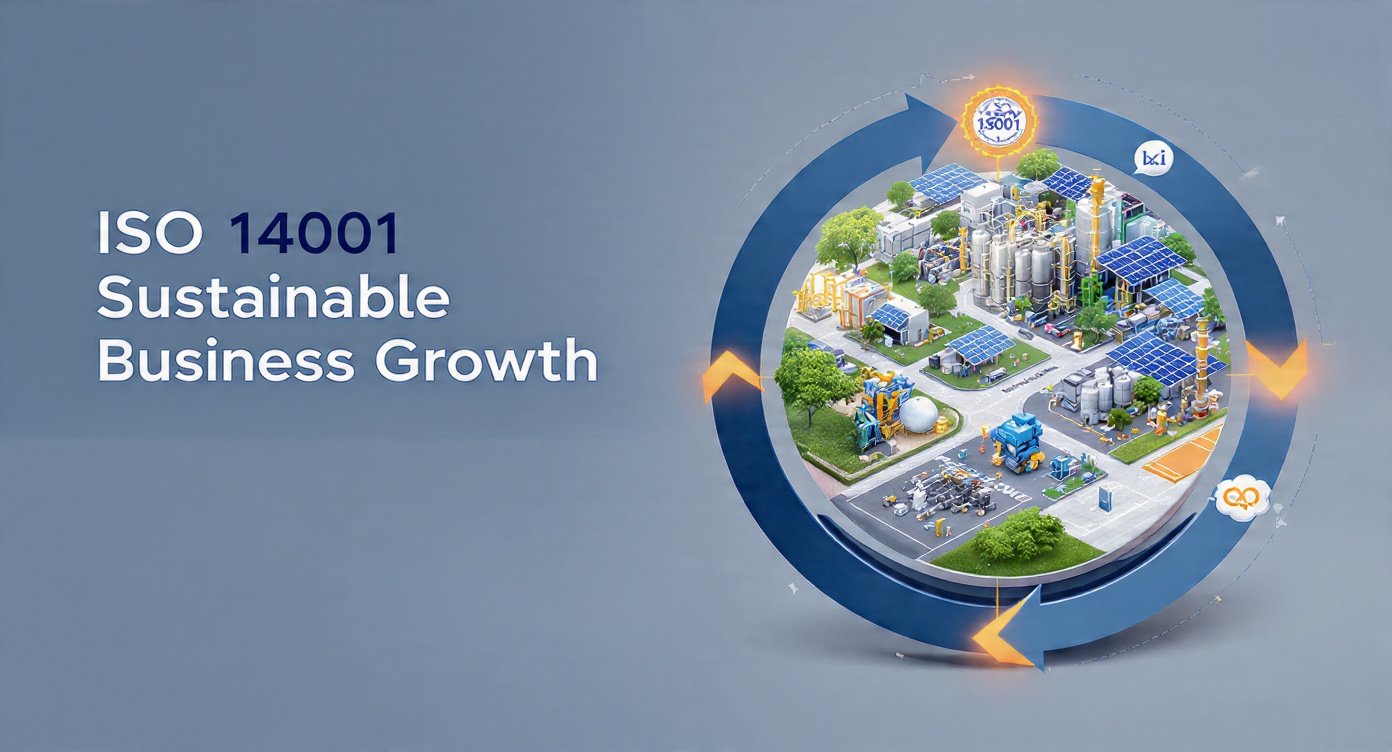
Sustainable growth has become a strategic priority for organizations across industries. Businesses are increasingly expected to balance economic success with environmental responsibility while meeting the expectations of customers, regulators, investors, and other stakeholders. Organizations that fail to address environmental concerns often face higher operational risks, regulatory challenges, and reputational damage.
However, sustainability is not simply about reducing environmental impact. When approached strategically, it can become a powerful driver of operational efficiency, resilience, and long-term business success.
This is where ISO 14001, the internationally recognized standard for Environmental Management Systems (EMS), plays a critical role. ISO 14001 provides organizations with a structured framework to manage environmental responsibilities while improving operational performance. Rather than treating sustainability as a separate initiative, the standard integrates environmental management into everyday business operations, helping organizations achieve sustainable business growth.
Understanding ISO 14001
ISO 14001 is designed to help organizations identify, manage, monitor, and improve their environmental performance. It establishes a systematic approach to environmental management that enables businesses to control their environmental impact while maintaining operational effectiveness.
The standard focuses on several key principles, including:
- Environmental risk management
- Compliance with legal and regulatory requirements
- Resource efficiency
- Pollution prevention
- Continuous improvement
- Leadership involvement
Unlike many environmental programs that focus solely on compliance, ISO 14001 encourages organizations to build sustainability into their long-term business strategy.
Why Sustainable Growth Matters
The business landscape has changed significantly over the last decade. Customers increasingly prefer environmentally responsible organizations. Investors are evaluating environmental performance as part of their risk assessments. Governments continue to introduce stricter environmental regulations, and supply chains are placing greater emphasis on sustainability requirements.
As a result, organizations can no longer view environmental responsibility as an optional initiative. Sustainable growth requires balancing profitability with environmental stewardship.
Businesses that successfully integrate sustainability into their operations often experience:
- Improved operational efficiency
- Reduced costs
- Stronger stakeholder trust
- Better risk management
- Enhanced brand reputation
- Increased market opportunities
ISO 14001 provides a structured pathway to achieve these outcomes.
Improving Resource Efficiency
One of the most immediate benefits of ISO 14001 is improved resource management.
Many organizations consume more energy, water, raw materials, and other resources than necessary. These inefficiencies increase operational costs and contribute to environmental impact.
Through environmental assessments and performance monitoring, ISO 14001 helps organizations identify areas where resources are being wasted. Once identified, businesses can implement targeted improvement initiatives to optimize consumption and reduce unnecessary losses.
Examples include:
- Reducing energy usage
- Minimizing water consumption
- Improving material utilization
- Lowering waste generation
- Enhancing recycling programs
By improving resource efficiency, organizations not only reduce their environmental footprint but also strengthen profitability.
Strengthening Risk Management
Environmental risks can significantly impact business continuity and growth.
These risks may include:
- Regulatory non-compliance
- Environmental incidents
- Resource shortages
- Waste management challenges
- Supply chain disruptions
ISO 14001 requires organizations to systematically identify environmental aspects and evaluate associated risks and opportunities.
This proactive approach enables organizations to anticipate potential issues before they become major problems. Instead of reacting to environmental incidents, businesses can implement preventive controls that reduce exposure and protect operations.
Strong environmental risk management supports stability, resilience, and long-term growth.
Enhancing Regulatory Compliance
Environmental regulations continue to evolve globally. Organizations must navigate increasingly complex compliance requirements related to emissions, waste management, resource usage, and environmental protection.
Failure to comply with these regulations can result in:
- Financial penalties
- Legal action
- Operational disruptions
- Reputational damage
ISO 14001 provides a framework for identifying applicable environmental obligations and maintaining compliance through structured processes and monitoring activities.
This systematic approach reduces compliance risks and helps organizations demonstrate accountability to regulators and stakeholders.
Building Stakeholder Trust
Trust has become a valuable business asset.
Customers, investors, partners, and regulatory authorities increasingly expect organizations to demonstrate environmental responsibility. Companies that actively manage their environmental impact are often viewed as more reliable, responsible, and forward-thinking.
ISO 14001 certification provides independent verification that an organization has implemented an internationally recognized environmental management system.
This certification can strengthen stakeholder confidence by demonstrating a commitment to:
- Environmental responsibility
- Regulatory compliance
- Continuous improvement
- Sustainable operations
As trust increases, organizations often gain stronger customer loyalty, improved business relationships, and enhanced market credibility.
Supporting Continuous Improvement
A key principle of ISO 14001 is continuous improvement.
Environmental performance is not a one-time achievement. Organizations must continually evaluate their systems, monitor performance, and identify opportunities for improvement.
The ISO 14001 framework encourages businesses to:
- Establish measurable environmental objectives
- Monitor progress through performance indicators
- Conduct internal audits
- Review the management system’s effectiveness
- Implement corrective actions
This cycle of continual improvement ensures that environmental management remains dynamic and aligned with changing business conditions.
Over time, continuous improvement contributes to stronger operational performance and sustainable growth.
Creating a Competitive Advantage
Organizations that adopt ISO 14001 often gain advantages that extend beyond environmental performance.
Many customers and procurement programs now consider environmental management when selecting suppliers and business partners. In some industries, ISO 14001 certification can improve access to new markets and business opportunities.
Environmental excellence can also differentiate organizations from competitors by demonstrating a proactive commitment to sustainability.
As environmental expectations continue to increase, businesses that invest in structured environmental management systems position themselves more effectively for future growth.
How TUVWESTEN Supports ISO 14001 Implementation
Successfully implementing ISO 14001 requires more than documentation and compliance activities. Organizations need a practical framework that aligns environmental objectives with business goals and operational realities.
TUVWESTEN supports organizations throughout their ISO 14001 journey by providing environmental management training, implementation guidance, internal audit support, gap assessments, and certification readiness services. Through expert support and structured methodologies, organizations can build effective Environmental Management Systems that strengthen compliance, improve efficiency, and support long-term sustainable growth.
Conclusion
Sustainable business growth requires organizations to look beyond short-term performance and consider the long-term impact of their operations. Environmental responsibility is no longer separate from business success. It has become an essential component of resilience, efficiency, and competitiveness.
ISO 14001 provides a structured framework that helps organizations integrate environmental management into their business strategy. By improving resource efficiency, strengthening risk management, ensuring regulatory compliance, and fostering continuous improvement, the standard supports both environmental stewardship and business performance.
Organizations that embrace ISO 14001 are better positioned to meet stakeholder expectations, adapt to changing regulations, and achieve sustainable growth in an increasingly environmentally conscious marketplace.